Quick summary: Three former crew members of a Thai cargo ship attacked in the Strait of Hormuz have filed a lawsuit against the vessel operator and captain, alleging labour violations and severe negligence for transiting a high-risk conflict zone. The plaintiffs were dismissed early from their contracts after surviving the fatal strike, and they have since been diagnosed with PTSD that requires over a year of medical treatment. For public policy and healthcare practice within the maritime industry, this case highlights an urgent need for stricter corporate risk evaluations and improved psychological support systems to protect the mental health and long-term well-being of global seafarers.
Three former crew members of a Thai cargo ship attacked in the Strait of Hormuz have filed a lawsuit against the vessel’s operator and captain, alleging labour violations and negligence amid heightened tensions in the Gulf.
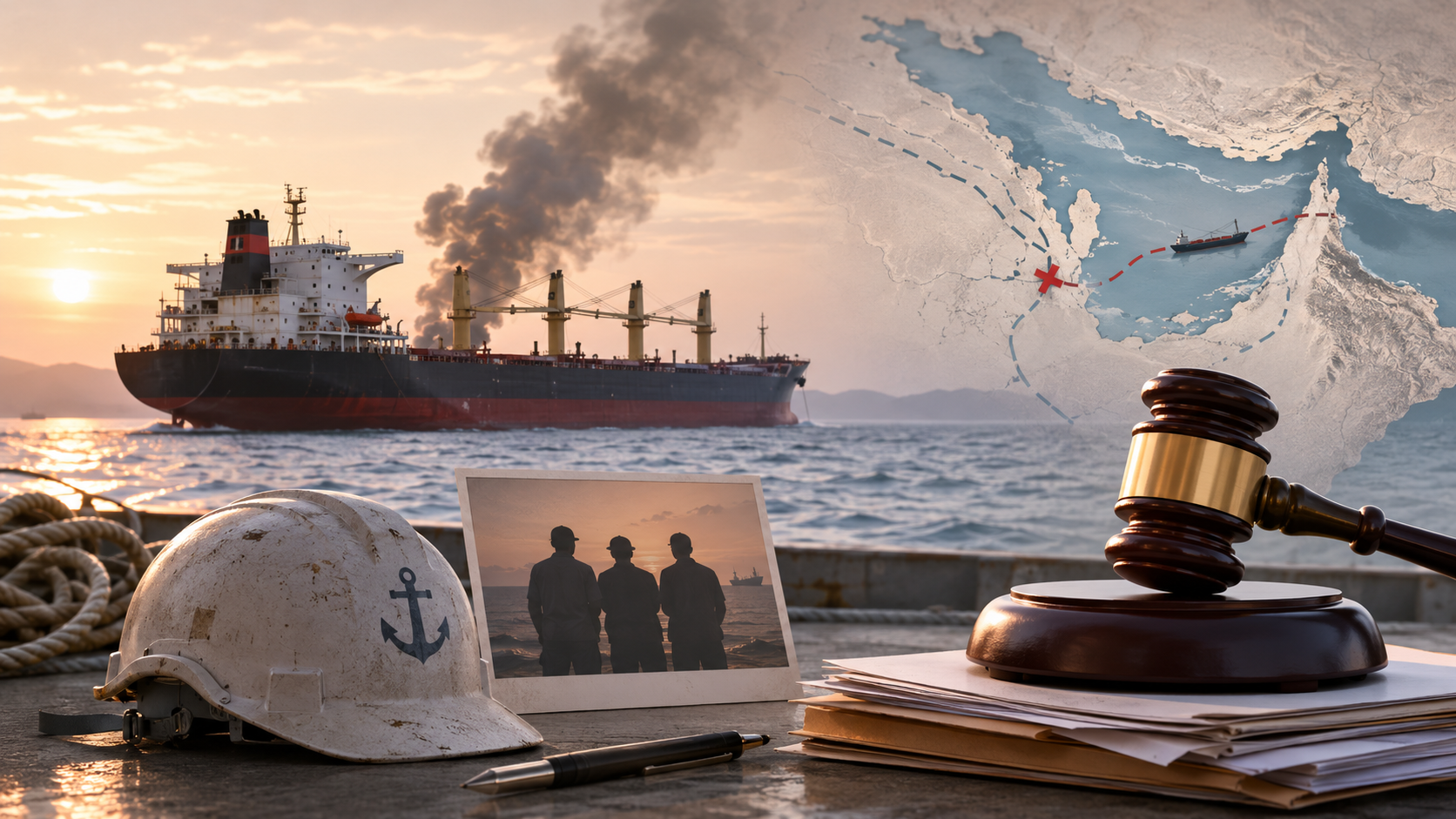
The Thai-flagged Mayuree Naree was hit on 11th March while travelling through the Strait of Hormuz early in the US-Israeli war with Iran, leaving three Thai crew members dead and requiring 20 others to be rescued. US-Israeli strikes on Iran in late February had prompted Tehran to respond by effectively closing the strait, a crucial artery for global oil supplies, and launching attacks on vessels.
The three deceased crew members were reported trapped or missing in the immediate aftermath of the strike, which caused damage to the engine room and a fire on board. The Omani Navy assisted in rescue operations, and survivors were eventually returned to Thailand. The incident occurred shortly after the vessel departed from Khalifa Port in the UAE.
Former crew members Panithi Tumkaew, Noppadon Wongsuvan, and Suradech Manpuen were dismissed after the incident and suffer from post-traumatic stress disorder following the attack, their lawyer, Kunpat Singhathong, said.
They filed a lawsuit at the Central Labour Court in Bangkok against the ship’s owner, Precious Shipping, two affiliated companies, Precious Flowers and Great Circle Shipping Agency, and the vessel’s captain, Sathaporn Hoksee. All are Thai. The suit claims the companies acted negligently by ordering the ship to transit the strait during the conflict.
Singhathong said his clients were paid compensation equivalent to two months’ salary before being dismissed in April, despite having nine-month employment contracts that had not yet expired. “Three of the crew members have since been diagnosed with PTSD, which doctors say will require more than a year of treatment,” he said. “This has left them unable to continue working as seafarers or carry out their daily lives normally.”
Speaking to reporters outside the court, Tumkaew said his wife encouraged him to seek medical treatment after noticing changes in his behaviour. “I get startled when I hear loud noises,” he said, adding that he had worked for Precious Shipping for more than a decade.
The lawsuit seeks damages of at least 1 million baht (about $30,000) for each plaintiff, according to reports. The Central Labour Court will examine evidence related to employment contracts, dismissal procedures, and duty of care obligations, with the first hearing scheduled for 28th September.
In a statement, Precious Shipping said it had complied with applicable laws and fulfilled its obligations to the crew, adding that it had provided medical and psychological support following the attack. The company said it had not yet been formally served with the lawsuit and could not comment on the allegations. Precious Shipping operates a fleet of bulk carriers.
Maritime security experts have noted that the Strait of Hormuz remains a high-risk area, with attacks on commercial vessels raising questions about risk assessment by shipping companies operating in the region. The Mayuree Naree attack was one of several incidents reported in the strait around that period, contributing to disruptions in global energy supply chains and higher insurance premiums for vessels transiting the area.
PTSD among maritime workers has gained increasing recognition in recent years, with calls for improved support systems and compensation frameworks. Lawyers for the plaintiffs argue that the decision to proceed through the strait, despite known warnings and escalating military activity, constituted a failure to prioritise crew safety.
As the first hearing approaches, the outcome could set a precedent for how shipping firms handle compensation and liability in cases involving geopolitical risks and crew trauma. Seafarers from nations like Thailand, which supplies a significant portion of the global maritime workforce, often face heightened vulnerabilities in such scenarios. Advocates for seafarers’ rights have welcomed the lawsuit as a step towards greater accountability, hoping it will encourage stricter risk evaluations before voyages in volatile regions.
About the Author


